
Importance of testing an E-Commerce Application

Importance of testing an E-Commerce Application

Let’s say you buy a book from Amazon or Flipkart, unknowingly you are becoming a part of an industry which is not just about you getting that book but much more.

Sure, online stores are a very important aspect of E-commerce but it’s not just that. As B2C did, B2B professionals are also relying on E-commerce today. It is an efficient way of business and has already acquired good taste in the market. Today, many businesses are trading their products and conducting monetary transactions through online modes.

Supply chain management, Online fund transfer, integrated inventory management, digital marketing, are some of the elements in this culture that have radically changed the way businessmen looked at their work. The growth is exponential and still easy to grasp. It is said to be the way of the future as it proposes many benefits which the traditional method lacked.

One of the most prominent features of this is that It’s more transparent. It also helps in the organization of real-time inventory management and finances in a Business to Business model. And what impact does it have on Business to Consumer scenario? Well, you can see what a giant consumer service company Amazon is today!

So, the actual face for the daily workings of this method is the Software and Applications that are available in almost everyone’s pocket or at home. So, it becomes of utmost importance to test these applications to ensure a safe and growing future.

Let’s have a look at some main reasons to do so!


1) User-Friendliness

It’s not false when they say ‘Consumer is god’. On the contrary, it is quite the ultimate truth in the B2C working environment. Here, one needs to design an app considering the taste of the target consumer group. Without providing features that are user friendly, they won’t survive. But, while doing this, it is important to take care of the functionality of the application. It might be because of the technical load that these websites go through. Sometimes too much traffic loads the application and affects the functionality of the website.

That’s why testing the functionality of the site becomes an important task. Mainly at the time of load. It should be done to ensure a user-friendly experience even at the high-traffic times.


2) Browsers variation

The world is a democratic place. People from different cultures behave differently and use different things. It’s not just history. Even in the techno-driven world today, people are going to use different methods to do different things. Just like devices, there is a variety in the browsers.

Any E-commerce website today is filled with different features and options. There are Images, Videos, Social Media Plug-ins, and whatnot. Sure, it helps the consumer to get a good idea about the product or the company but it also becomes difficult if it doesn’t appear in the supposed layout.

One should expect it to happen as these websites are accessed by people from various browsers like Internet Explorer, Google Chrome, Mozilla Firefox, etc. Here the tester comes in. The testing of these websites to work in different web browsers should be done pre-release. And not to ignore that Post-release constant monitoring and testing is needed. It must be done to ensure smooth experience to the consumer regardless of the browser she is using.


3) Devices variability

On the similar lines as the earlier point, the devices also differ. Not everyone is going to use the website or application from their smartphones. It could be anything like Computers, laptops, tablets, and whatnot.

So, it is necessary to test the website or application concerning the usage of different devices. It should be a smooth experience for the consumer.


4) Secure Applications

Out of all the applications, The E-commerce type is the most vulnerable. It is highly probable that the security of these apps and websites could get breached as the transactions and trade here is monetarily important to both a businessman and a consumer.

Important personal data about the consumer like a PIN number, Debit/Credit card number, etc are at a threat if the security testing of these apps is not done right away. Also, remember to test the security regularly as the danger is present all the time.


5) Billing

The companies should be aware of processing the billing process of these websites correctly. There should not be any error or problem in the billing as it would make a bad impression on their consumer base, ultimately impacting the business.

When companies offer discounts and offer on their products this way, they need to ensure that the processing of that discount is done finely as the consumer won’t be happy if anything goes wrong. It is necessary to make sure that the customer feels happy about your company and have a safe and easy experience while performing these formalities.

Things like adding taxes, generation of the invoice, Emailing the bill to the consumer should go without any error to give the customer the satisfaction and to make her/him feel safe.


In conclusion,

We know that this is an ever-growing market. Many new companies are starting their business with the help of this and many big companies have already made their mark based on this digital manifesto.

Both these businesses should constantly test their sites and applications for the given reasons. If not, there are very fewer chances of them surviving in the market. While doing this, they should make sure that they are testing the sites by selecting the correct methods and performing the right tests.

This will only guarantee them more consumers and most importantly, happy once!


Namrata Shinde — Functional Testing Expert, VTEST

Namrata is a Functional Testing Expert at VTEST with deep experience in mobile, UI, and end-to-end testing. She ensures every release is thoroughly validated and bulletproof before reaching end users.

 

Automation Testing – Myths & Realities

Automation Testing – Myths & Realities

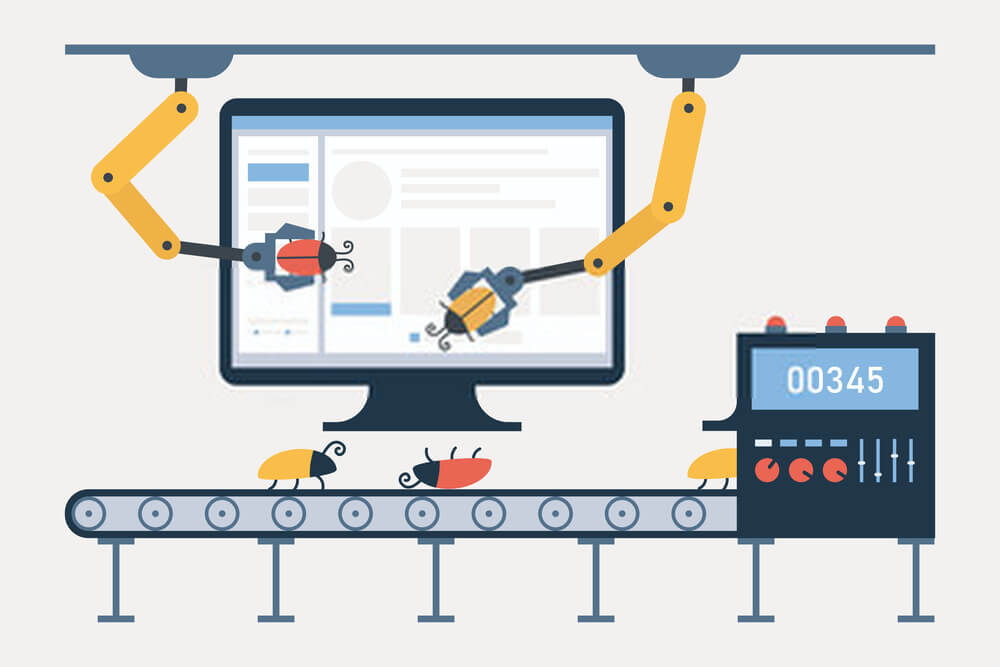
Though automation testing is the method of the new era, many techno-geeks and testers prefer the old-school manual testing method. We know that it’s hard to get around the new method and get adapted to the Automation but if not done, it’s your loss.

Automation testing provides many benefits which one cannot achieve through manual testing. Instant feedback, more frequency of the test execution, more test coverage to the development team, quicker releases are a few of them.

In spite of these, there are certain common misconceptions about automation testing. Today, we have decided to clear out these myths from your mind and to make sure that your work flow will get faster and efficient.

So, come on, let’s clear them out.


Disbelief about automation testing.

#1: Automation testing is superior to manual testing.

  • Deciding which kind is better is, in this case, an irrelevant discussion. The purpose and intention of both the methods is different. First of all, we cannot say that automation testing is testing as such. It’s a process of checking facts. Facts about the system. When we have to tally our knowledge of the system, we perform automation testing, to confirm that understanding with the truth.

Well, Software testing is like an investigation. It gives away new data and knowledge about the respective system. So, as said earlier, it will be rookie mistake to choose only one. For quality results, it is an unavoidable decision to use both methods for a more efficient work ethic.

#2: Doing 100% Automation testing.

  • It’s hard to achieve 100% test coverage. Almost impossible. It’s same for the test automation. Though we can increase test coverage by utilizing more data, configurations, covering various operating systems and browsers, 100% is an unachievable target.

Unfortunately, it’s a false equation that more the number of tests, better the quality. Quality of the test is directly dependant on how precise and good your test design is. So, rather than trying to get full coverage, the prime goal of your test should be to concentrate on the more prominent areas of functionality of the product.

#3: Deciding a quick ROI each time.

  • When you execute a test automation result, a clear development of the precise regions of interests is important to support operations. This Framework creation can be useful and will give more meaning to test case selection, reporting etc. This is supposed to be considered as a project in itself. Due to this treatment, it requires multiple skilled developers and takes a lot of time.

Even with a fully working framework, making scripts of automated checks takes more time at the start. So, to have a quick result or feedback of the new feature, one should check it manually.

#4: Automated Checks are having higher Error Recognition Rate

  • Even if it is true that vendor-supplied or home-made test automation solutions are greatly capable of performing complicated operations; it’s quite impossible that they will ever replace a human tester. A tester’s capabilities are much beyond and precise. She can detect the most invisible anomalies in the application.

Though it is called an ‘automated’ test, an automated check is not automatic until written. It will only perform according to the program written. Hence, the programs are only as good and precise as the person who wrote them. So it should be quite clear to you guys that if any automation program is not written properly, it can directly ignore some prominent errors in the systems. In essence, Automation testing can see if there are any errors in the system but can’t confirm that they are the only errors present. There might be more undetected defects due to bad program writing.

#5: Unit Test Automation is everything we need.

  • This is a quite common misconception. But one should get it clear that a unit test only identifies programmer’s errors. It does not show his failures. A much larger element of testing comes ahead when all the components are joined together to form a system. Many of the organizations have their automated checks at the system UI layer.

The process of writing scripts of the automated checks is a complicated task because the functionalities during the development are absolutely volatile. So, don’t spend your precious time on automating a functionality which might not be a part of the final application. It can create problems later.

#6: System UI Automation is the whole ball of wax.

  • It’s a mistake to depend solely on automated checks, that to at UI layer. The period of development comes with a number of changes in the UI in various forms like enriched visual design and utility. A fallacious impression about the application’s condition is noted in the checks if a similar change hasn’t taken place in the functionality.

The automation checks in the unit and API layers have a higher execution speed than the UI layer. Hence, the feedback process becomes slow. And because of the exact location of the error is yet unknown, the analysis of the root cause takes much longer. Hence, identifying the layers where the utility of automated tests may become helpful becomes a must.


All in all, if you decipher these misconceptions as we did, you will notice a dynamic shift in your working. It will become more fast and efficient.

Understand that automated checks are not something which you do once and you are done. It’s a constant process of updating and monitoring. Make sure you are aware of the limitations of it and have targets which are realistic.

After all, you must not stick only to manual testing and get the most out of automated checks too!

Vikram Sanap — Test Automation Expert, VTEST

Vikram is a Test Automation Expert at VTEST with deep expertise across multiple automation tools and frameworks. He specialises in transforming manual workflows into efficient, reliable automated test suites.


Related: Best Practices for Test Automation Framework

Compliance Testing is crucial to your business. Learn why!

Compliance Testing is crucial to your business. Learn why!

For obvious reasons, all you testing geeks indirectly give more preference to Functional testing of your software products. Though it’s true that it makes the product easier to use and responsive, it is not enough. A fine tester always gives equal importance to the Non-Functional testing.

There are so many aspects of non-functional testing which affect the health and performance of your software product in the long run.

Beware! It can ultimately become hazardous to the success of your product.

Out of those various aspects, Compliance testing is one of the fundamental elements of Non-Functional testing and also testing in general. It is the technique that validates if the product is considering the organizational standards or not. So to have a long run with your product, Compliance testing is a must.

Here we discuss the theory in regard to Compliance testing.

What is it?

It is basically the validation or evaluation of your software product with respect to the Regulations and standards that it has to be in boundaries of. An assessment of a sort. An Assessment of whether the product is completing the requirements and specifications that it has to complete. As it confirms the validity of the product, it’s also commonly known as, Conformance testing. As it is a type of non-functional testing, it is quite an auditable test.

Elements

Compliance testing is done for various aspects. As there is a deviation in the defined standards, many elements of the software get affected. Through Compliance testing, those can be assessed.

Check out the list below of those elements.

  • Performance
  • Functions
  • Rigorousness
  • Interoperability
  • System Behavior

Importance

For performing this test, first we need to understand that why is it important. Our mind should be clear about why do we need it? To answer this question, following points are to be considered.

  • Validation of the product about completing all the requirements of the system and the standards.
  • Assessment of the documents.
  • Authentication of the software design, development, and to again evaluate the product as per the standards, guidelines, specifications and norms.
  • To check if the system maintenance is defined as per specified standards and suggest approach.
  • Making sure that your product is free from any kind of complaints from regulatory organizations.
 

Who does it?

Generally, companies do not implement compliance testing. It isn’t considered as compulsory. But the Application of Compliance testing is largely dependent on the company’s management. If the management decides to do the compliance testing, they get a tester from outside or sometimes they just ask the company team to execute it.

Many of the companies also arrange a board of experts in the field to evaluate and authenticate different policies, specifications, regulations and guidelines.

What to test?

The testing is started by the managing board of the company. They first try to completely understand the team considering different regulations, specifications, guidelines, etc.

To make sure the results are best and to assure the quality, all the Standards and guidelines must be clearly stated to the team to avoid any vague steps.

  • Scope of requirements
  • Call of the software to be developed
  • Requirement objectives
  • Execution Standards

When to do it?

Whenever one needs to check the comprehensive ability and reliable nature of the software along with assessing how accurate the product is with respect to the requirement specifications.

How to do it?

As stated earlier, the Compliance testing is more like an audit. It does not require any specific method.

It can be done easily like we the other testing processes. Though here is not a specific method to it, we tried to break down the process for you in the following points.

  • The initial stage is to get hold of all the precise data regarding all the rules and regulations and other standards and norms.
  • Secondly, one needs to document all the collected data in first step properly.
  • After that, a clear and precise assessment of all the development phases against the documented standards and norms id required. It should be done to detect and note any deviations or errors in the executed process.
  • Next, a report should be made including all the errors to the respective team.
  • And finally, a re-verification is required to authenticate the affected areas after the errors have been fixated. It is to make sure the conformance of the standards required.
  • This is not a mandatory step but if needed, provision of a certificate can be made for the compliance

To make things easy for you, there are many tools available in the market to execute the compliance testing. You can choose any tool based on your system typ and required standards.

Check them out! After all, anything which saves time and efforts is worth a try. Right?

  • MAP2.1 conformance testing tool
  • Software Licence Agreement OMS Conformance Tester 4.0
  • EtherCAT conformance testing tool
  • CANopen Conformance test tool

Advantages

Though Compliance testing is not a compulsory element of the SLTC, but it is recommended to execute it to make sure your software is performing better and overall software compliance.

Still not convinced? Here is a list of some advantages

  1. It guarantees proper application of required specifications
  2. It authenticates interoperability and portability
  3. Authentication of whether the required standards and norms are properly obeyed to.
  4. Validation of the workings of the interfaces and functions.
  5. Helps in detecting the areas which are yet to be confirmed with those which are not to be confirmed like Semantics and Syntax

Challenges

Yes, Compliance testing does not have a specific methodology. Yes, It can be performed like any other testing. But still, there are challenges. It is not as easy as it seems. But the challenges are not vague. They are known and test the strength of the tester’s abilities.

We have listed some of the challenges for you.

  1. Identification of the class of the system and then testing according to the class by going through a suitable methodology. This will promise you the best of results.
  2. Specifying specifications into Profiles, Levels, and Modules.
  3. Having a complete know-how of different standards, norms and regulations of the system which is to be tested.

Conclusion

In closing, Functional testing of your software product is necessary but it would not be fair to the subscribers of your product if you ignore the Non-functional testing. To have a smooth and uninterrupted experience for a long time, Non-functional testing is as important and Compliance testing assures that the user will be satisfied. So, Test it ASAP!


About VTEST


Related: Penetration Testing: Definition, Need, Types, and Process

Namrata Shinde — Functional Testing Expert, VTEST

Namrata is a Functional Testing Expert at VTEST with deep experience in mobile, UI, and end-to-end testing. She ensures every release is thoroughly validated and bulletproof before reaching end users.

Why ignoring Security Testing will cost you time and money

Why ignoring Security Testing will cost you time and money

Security Testing

Software testing has a massive impact in our lives today. Its indirect and Invisible but it affects our world in a huge way. Its present and growing fast like a bamboo in every sector that the world consists of. Its almost impossible to work efficiently in this digital world, if one is not fully taking benefit of the perks that the digital platform offers. For managing their businesses, many companies already use different web-systems and IT solutions. But every coin has two sides. Though the digitalisation makes it easy to do business like ease of method of Payment and banking related procedures, Stocks, Sales and Purchases of the products etc., it surely has a big danger of the security breaches. That’s why it is important for companies and businesses today to test their securities and tighten the ropes for the dangers to come, Making Security testing one of the most prominent aspects of software maintenance. So, come on, let’s check these basics of security testing.

1. Accessibility

Everywhere in the world, where there is security, there is always a question of accessibility. It should be the primal goal to make sure the accessibility of the security is bound in fair rules and good hands. It’s for your own customers’ good. It includes two main factors, Validation and Authorization. Authorize a person who will access the security and make sure to confirm how much accessibility have you given to the person. To help ensure that the information and data is safe from external as well as internal breaches, conduct the accessibility test. For this test, you need to test the responsibilities and roles of employees in your company. Getting a tester who is good at what He/she does is always preferable. The tester is supposed to generate multiple user accounts, consisting of various roles. Those accounts will then help you know the security status from the Accessibility point. This test can also be consisting of the Default login feature, Captcha test, Password Quality and strength, and other login and signup related tests.

2. Data Protection Level

Your data’s security is dependent on the following factors:

  • Data usability and transparency
    It is about how much data on your website your users can see. How much of it is visible.
  • Data storage
    This is about the security of your information database.

After testing and noting the vulnerabilities, Proper security testing measures are needed to get assurance about the effectiveness of the storage of the data. If a tester is professional, he /she could surely test the database for every type of critical and prominent data such as passwords, billings, user accounts, etc. There should be end-to-end encryption while the data is being transmitted. Also, the database should have all the important data. Checking the ease of decryption of the encrypted data is also one of the signs of a fine tester.

3. Malicious Script tests

Most of the times, Hackers use SQL and XSS injection to hack a website. They do it by injecting a malicious script into the system of the website allowing them to manipulate and take control of the hacked site. A tester makes sure that your website is safe from these harmful practices. This can be solved by the tester by adding a restriction on the maximum length of characters allowed in the input fields. This avoids the entry of malicious scripts from hackers.

4. Access Points

Human mind can’t work without collaboration. We need other human to survive. And this reflects in our behaviour. One business needs the other business to survive in the market. Hence collaboration becomes one of the prominent factors of this large pit of Businesses. Let’s take an example. If there is a Stock trading app, it has to constantly give access to the users to the latest information and database and to the upcoming users as well. But, as we know, this open access gives way to another big problem known as unwanted breach. Checking the entry points for the app and making sure that the access requests are coming from reliable IPs and applications is what a tester does to avoid these kinds of problems. And if not, The System of your app must have the capacity to cancel and reject those requests.

5. Session Management

Session management test is also another important aspect. A session on the web consists of the response transactions between the browser and your web server. The testing involves various actions such as maximum lifetime of termination, expiry time of the session after a certain idle period, session end time after a user logs out etc.

6. Error Handling

As a user, you must have seen websites going down with errors like Error:404, Error :408 etc. A bit annoying right? Error handling tests are the tests where these kinds of error codes are handled. Here, the tester performs directed actions to ultimately reach such pages and makes sure that the visible page is not having any important piece of data or information. It also involves checking up the Stack traces. Basically, making sure that the hackers will get disappointed!

7. Other Functionalities

Though this is the last “etc.” test, it should not be ignored. Features like Payments, File uploads etc. require vigorous testing as any breach can harm the website, ultimately harming the business. Here tester should be careful on testing the delicacies related to payments like insecure storage, Buffer overflows, Password guessing etc. And Obviously, Malicious files must be restricted.

Well, these are the few tests that we suggest. Obviously, if the tester recommends and suggests other tests for your particular business model, you should do them. Anyway, The more the merrier. Afterall, every business model has its own needs and requirements. So, Start your testing now. Conduct the tests and tighten the security of your software. Because as we all know, one who owns the digital market, owns the market. And to own it, one should take care of the security of his/her Digital persona.


Shak Hanjgikar — Founder & CEO, VTEST

Shak has 17+ years of end-to-end software testing experience across the US, UK, and India. He founded VTEST and has built QA practices for enterprises across multiple domains, mentoring 100+ testers throughout his career.


Related: Penetration Testing: Definition, Need, Types, and Process

Software Testing Outsourcing: 15 Points to Consider

Software Testing Outsourcing: 15 Points to Consider

Software testing outsourcing has changed substantially since the pre-2020 era of large offshore staff augmentation contracts and time-and-materials arrangements. The combination of remote-first work culture, AI-augmented QA tooling, and a maturing global talent pool has created a more sophisticated outsourcing market — one that offers enterprises genuine quality leverage if they evaluate and engage vendors correctly. This guide covers the 15 critical considerations for any organisation evaluating software testing outsourcing in 2026.

Why Organisations Outsource Software Testing

Before evaluating vendors, it is worth being clear on what outcome you are purchasing. Organisations outsource QA for different reasons, and the right vendor, engagement model, and governance approach vary accordingly:

  • Capacity scaling: Surge coverage for a major release without permanently growing headcount
  • Specialist skills: Security testing, performance engineering, or mobile automation expertise the internal team lacks
  • Cost efficiency: Accessing quality QA execution at lower cost than building the same capacity internally in high-cost markets
  • Speed: Bypassing the 3–6 month ramp-up of internal hires for an immediate-start engagement
  • Independent validation: A third-party quality assessment that is free from the confirmation bias that sometimes affects internal teams

Knowing your primary driver shapes every subsequent decision.

15 Points to Evaluate When Outsourcing Software Testing

1. Domain and Technical Expertise

The most important question is whether the vendor has genuine expertise in your domain and technology stack. A firm that excels at fintech QA may not be the right fit for a healthcare SaaS product. Ask for specific case studies in your domain, the credentials of the engineers who will work on your account, and evidence of familiarity with your tech stack — not just generic claims of “experience with all technologies.”

2. AI and Automation Capability

In 2026, a QA vendor that cannot demonstrate AI-assisted testing capability is behind the curve. Evaluate whether they use modern automation frameworks (Playwright, Cypress, Appium), whether they have integrated LLM-based test generation into their workflows, and whether they can implement self-healing automation for your application. AI capability is now a baseline differentiator, not a premium add-on.

3. Engagement Model Flexibility

Rigid engagement models that don’t match your development cadence create friction. Evaluate whether the vendor can support your sprint rhythm: participating in sprint planning, delivering test results within the sprint, and adapting test scope as requirements evolve. Fixed-scope waterfall testing contracts rarely work well with agile development teams.

4. Team Continuity and Stability

High attrition is endemic in some outsourcing markets, and every team change sets back the contextual knowledge the vendor has built about your application. Ask about average tenure of QA engineers, how the firm retains talent, and what their continuity plan is if a key resource leaves your account mid-engagement. Reference checks with existing clients about team stability are particularly revealing.

5. Communication and Time Zone Alignment

The working hours overlap between your team and the vendor team is more important than the cost differential between time zones. A vendor with a 1-2 hour overlap per day will create significant coordination overhead — async communication on defect queries, delayed responses to clarification requests, and sprint review meetings at inconvenient hours. Consider whether the vendor’s working hours provide sufficient overlap for your collaboration style.

6. Toolchain Compatibility

The vendor’s tools need to work with yours. Ask how they will integrate with your project management system (Jira, Linear, Azure DevOps), your CI/CD pipeline (GitHub Actions, Jenkins, GitLab CI), your defect reporting workflow, and your communication channels. A vendor who insists on their own separate toolchain creates a data silo and increases coordination overhead.

7. Security and Data Handling

Outsourced QA teams typically access your codebase, test environments, and potentially production-representative data. Security due diligence is non-negotiable. Evaluate: background check and vetting processes for engineers, access control practices (least privilege, MFA), data handling policies for test data containing PII, NDA and IP ownership terms, and whether the vendor has relevant security certifications (ISO 27001, SOC 2).

8. Quality of Defect Reporting

The value of outsourced testing is largely delivered through the quality of defect reports. Ask for sample bug reports from existing engagements. Good defect reports include: clear reproduction steps, environment details, actual vs expected behaviour, severity and priority reasoning, and supporting evidence (screenshots, logs, network captures). Vague defect reports waste developer time and create friction instead of value.

9. Test Coverage Transparency

You should have clear visibility into what is being tested, what is not, and the rationale for coverage decisions. Ask how the vendor documents test coverage — whether through test plans, test case repositories, coverage matrices, or automated coverage reports. Lack of coverage transparency is a risk management gap: you cannot manage quality risk you cannot see.

10. Scalability

Can the vendor scale up quickly when you need additional capacity? A vendor who can only serve your account with 2–3 engineers and cannot expand within a reasonable timeframe may not be the right partner for a growing organisation. Equally, can they scale back during low-demand periods without contract penalties that make the engagement uneconomical?

11. Post-COVID Distributed Work Maturity

The pandemic normalised fully remote engagement models, and the best outsourcing vendors now have well-developed remote collaboration practices: documented processes, asynchronous-first communication protocols, video standup culture, and tooling that gives clients visibility without requiring constant check-in meetings. Evaluate whether the vendor’s remote work practices are mature or whether they are still adapting a pre-2020 office-centric model to remote delivery.

12. Pricing Model Transparency

Understand exactly what you are paying for before signing. Common pricing models include time-and-materials (hourly rates for actual hours worked), fixed-price per sprint or milestone, and dedicated resource retainers (fixed monthly fee for a defined team). Each has trade-offs. Watch for vendors who low-ball the initial estimate and rely on change orders to make margin — reference checks with existing clients about whether engagements came in on budget are valuable here.

13. Onboarding and Knowledge Transfer Process

The first 2–4 weeks of any outsourcing engagement are a ramp-up period where the vendor learns your application, processes, and priorities. Ask the vendor how they structure this: what documentation they need from you, how long before their team is fully productive, and what you can do to accelerate the ramp-up. A vendor with a structured onboarding process is more likely to become productive quickly than one that relies on ad-hoc knowledge transfer.

14. Client References and Case Studies

Ask for 2–3 client references in similar industries or use cases and actually speak to them. Key questions: Did the vendor find defects that mattered? Were they proactive about quality risk or purely reactive? Did team composition stay stable? Would they engage them again? Case studies on a vendor’s website are marketing material; reference calls are intelligence.

15. Cultural and Process Fit

The intangible that often determines whether an outsourcing engagement thrives or merely survives is cultural fit: whether the vendor’s team communicates with appropriate directness, escalates quality risks without prompting, pushes back constructively on unrealistic timelines, and operates with genuine ownership of quality outcomes rather than a compliance mindset. This is hard to evaluate from a sales presentation — pilot engagements and reference calls are the best proxy.

Outsourcing Models to Consider in 2026

The outsourcing market now offers more varied engagement models than the traditional “offshore team” arrangement:

  • Dedicated QA team: A fixed team of VTEST engineers embedded in your development process — best for ongoing product development with consistent QA demand
  • Release-based engagement: QA coverage scoped to specific releases — best for organisations with variable release cadences
  • Specialist service: Specific expertise purchased for a defined scope — security testing, performance engineering, accessibility audit — without building ongoing capacity
  • QA advisory: Strategy and process consulting without execution — best for organisations building internal QA capability who need expert guidance

Why VTEST

VTEST has been delivering outsourced QA to clients across the US, UK, and India since our founding. Shak Hanjgikar, our Founder and CEO, built VTEST specifically to address the quality gaps he observed in early career as a QA practitioner working across enterprise and startup environments. Our team has domain depth in fintech, healthcare technology, e-commerce, and enterprise SaaS. We work in your tools, adapt to your sprint cadence, provide transparent coverage reporting, and hold ourselves accountable to your quality outcomes — not just hours delivered. If you are evaluating outsourced QA partners, we would welcome a conversation.

Further Reading

Related Guides

Shak Hanjgikar — Founder & CEO, VTEST

Shak has 17+ years of end-to-end software testing experience across the US, UK, and India. He founded VTEST and has built QA practices for enterprises across multiple domains, mentoring 100+ testers throughout his career.

Website Testing: Do You Really Need It ?

Website Testing: Do You Really Need It ?

In today’s world, may it be any individual or any organisation, if one needs to mark his presence and reach out to masses, having a website is a must. Its like having a name. That’s how people are going to know about you. It’s all you. Your Mission and Vision, Contact Information, Your work, basically anything and everything about you. Now if people are going to get to know about you through your website, it has to be user friendly and mainly bug-free. This is where this blog will help you. To make your website smooth and sharp to use, Test it! Now, what are the basic factors one needs to consider while testing a website? Is it the same as testing other software? Don’t worry! We will answer all questions regarding this kind in this article.

What is Website testing?

Naturally, the basic concept of testing remains the same but website testing differs in the way the testing develops. Overall, the process of testing is done aiming at removing bugs and making the website cleaner to use.

Why should one do it?

Oh! There are a lot of reasons. Check them out below.

  • None of us like it when an error comes while we are using a website. Phrases like “Couldn’t load Image” or “Tap to retry” annoy us. It is necessary for a website to be handy to the users in all its aspects, may it be Search box, Form submission or whatever. For that smooth experience, Website testing is necessary.
  • Internet is a democratic place from the first click in a way that there are various browsers from which one can browse websites. It is important for a website to work at all the browsers as smoothly as the another.
  • Website testing helps in considering how a website is being accessed and how is it performing for the thousands and sometimes millions of users it has.
  • For having a go at ranking higher on google, testing the website for web standard compliance is also important.
  • We all access various websites from our phones, tabs, computers and whatnot. Its not just the PC. For a website to work seamlessly in all these devices, Website testing is quite a necessity.
  • The digital world can also get dark sometimes. It’s the primal need of any website to have a tight security code. Website testing helps for identifying and solving these security related issues.
  • Whether the content on your website is comprehendible or not is another problem which can occur if you have a website. Content testing is another aspect of website testing.
  • Search Engine Optimization testing also known as SEO testing helps you by assuring your website a high rank on different search engines like Google, Yahoo etc.
  • Improvement of your website’s conversion rate can be done through A/B or Multivariate testing. This is another aspect of Website testing.

Website Testing Checklist

For Website Testing, follow a proper methodology. Make a list of all the aspects of it and what are the things each aspect needs.

1. Functional Testing

  • Confirm HTML usability.
  • Validation of various elements like Combo box inputs, text boxes, dropdowns, radio options, check boxes, links etc.
  • CSS (Cascading Style Sheet) verification.
  • Validation of the links to appropriately connected to the expected pages of your website as well as external websites.
  • Assurance of Email links functioning properly.
  • Check that there are no any broken links running on your website.
  • Validation of the consistency of the web forms. Also check that they are holding necessary input and output controls. Lastly, check that the data is being captured properly.
  • For the data to be effectively processed, Validate the database.
  • To make sure that the security is tight, do the cookie testing.
  • Check whether your website is displaying expected error messages.
  • Check whether the handling of optional and required fields is proper.
  • For proper storage of sensitive data, re-confirm the security measures.

2. Performance Testing

  • Giving the website different load conditions, test the aspects like Responsiveness, Scalability, Speed, Stability etc.

3. Web Usability Testing

  • Check if the Load-time of your website is appropriate.
  • Take a look at the text. Check its different aspects like line spacing, font size etc. The text should be easily readable.
  • Make sure the usage of Add-ons and Flash.
  • Validation of the correct use of ALT Tags for all the images.
  • If the internal link is broke, the error message which is being displayed should be proper.
  • Website logo’s and Tagline’s placement.
  • Contact details verification.
  • Check if the navigation system is easy and understandable to the users and the Labels used there are compact and clear. Also check if the buttons and links used for navigation are working correctly.
  • As you know, it is a common practice to connect the link of company logo to the Home page. Though it’s not mandatory, you may do it.
  • Validate the usage and proper positioning for the Search button.
  • The heading should be understandable but still illustrative.
  • Validate the usage of heading tags like H1, H2, etc.
  • Make sure that the critical content is being shown in average screen resolution at the start.
  • Check if the font styles and colors used across your website are consistent.
  • Use words and phrases which are easy to comprehend. Don’t hesitate to use slangs if needed to engage the users.
  • The titles should be accessible and relevant.

4. Compatibility Testing

For this, Check the mutual workings of your website with the following platforms.

  • Various browsers and their versions
  • Various Operating systems and their versions.
  • Hardware configurations.
  • Network environments.
  • Screen resolutions.

5. Web Security Testing

  • Validation of password cracking of your website.
  • Checking and testing the threat exposure of the website.
  • Validation of URL management.
  • SQL injection verification.
  • Cross Site Scripting (XSS) validation.


Website Testing: Types

There are various ways and parts of the process of Website testing.

  1. Functional Testing
    This is where you ensure the functionality of your website according to the requirement.
  2. Browser Compatibility Testing
    As mentioned earlier, every other person is using a different browser, so it is necessary for your web site to work smoothly on various browsers. Hence, to make sure it does, Browser compatibility testing is a must.
  3. Usability Testing
    The layout, navigation design and in hand experience of your website must be smooth for you user. These things come under the Usability Testing.
  4. Accessibility Testing
    This is a sub-type of Usability testing. This testing takes into account the niche user experience of people with disabilities. This specifically considers them as a user and makes sure that the experience is smooth.
  5. Performance Testing
    Every website performs under its own average load. It is a necessity that you test your website’s Performance considering its average load. This is important for the stability and responsive nature of your website.
  6. Stress and Load testing
    Continuing earlier point, if and when your website will take heavy load, it should work as smooth as earlier even in those conditions. Testing of your website in those heavy load conditions is called as Stress and load testing.
  7. Site Monitoring
    Constant monitoring of your website for analysing its downtime should be done. This avoids the regular down times and gives your users a good experience.
  8. Conversion Rate Testing
    One of the favourites of the current generation, this testing is a kick to marketing minds. This is where the testing for converting visitors into users is done.
  9. Security Testing
    To avoid hacking and other security related issues, Security testing is a must.
  10. Word proofing
    Its still annoys us if we see a nicely designed website having crushed the impression it made by having wrong grammar and spelling mistakes in the copy. Thorough Wordproofing should be done.

To reduce your website testing labour: Some Methods

Implement these techniques to reduce your work load while testing.

  • Automated testing
    As implied in the name, Automated testing lets you work on the creative and innovative part of the process by taking the work load of manual execution of every test case.
  • Mobile emulators and simulators
    As discussed earlier, it is a necessary but still so much work to test your website’s workings with different mobiles and Browser. First checking individually and then by combining various browsers with various handsets, it becomes so much extra work load. Mobile emulators and Simulators are an easy help to do this.
  • Live web testing
    By doing the testing through cloud, Live web testing allows you to make a website bug-less on various operating systems and browsers.

Tips!

At last, here are some quickies to make testing a good journey for you!

  1. Integration of Exploratory testing and Conventional testing methods
    Though it needs less preparation and attractive in executing, exploratory testing can have a few disadvantages. One can easily get over those by combining different testing methods. Also, you get two more advantages, Reliable test results and Reduced testing time!
  2. Sanity testing
    To reduce ore testing time, don’t forget about sanity testing!
  3. Validation of All Plug-ins, Extensions and Third-party apps
    Check the compatibility of the Plug-ins and Extensions. If any defects found, debug them. Don’t forget that this can badly affect your website’s performance.
  4. Chat box testing Automation
    The testing of Chatbots need to be done in various testing scenarios and also the Bot coordination testing is a necessity. Though it’s a time taking and hard process it needs to be done. So, automation of chat box testing can decrease your efforts.
  5. URL String Consistency
    Considering the security of your website, constantly check that the URL string of your website is unaltered. Hackers tend to alter it to hack important data or sometimes they redirect your website to some other spiteful link. Avoid that by URL string consistency.
  6. Beat a hacker by being one!
    Reverse psychology always works, think like a hacker and try to detect hacks so that by eliminating them, you will be ready to go.
  7. Being a part of the Development team.
    Be adaptive and work with different developers, customers and business analysts. With new methods like DevOps and Agile Methodology in the market, the need for collaborations is ever-growing.

Some tools for Website Testing

And here is the cherry on the top. Some tools to use while testing for having an easy testing experience.

  1. SoapUI
  2. TestingWhiz
  3. SOAPSonar
  4. SOAtest
  5. TestMaker
  6. Zephyr
  7. vRest
  8. HttpMaster
  9. Runscope
  10. TestRail
  11. WebInject
  12. Storm
  13. Qase

Conclusion

In conclusion, Websites are like identities of organisations in today’s world. It marks a company’s or individual’s existence in the digital world. And if one couldn’t build an impressive identity in the digital world, it’s hard to make an impact in the real world. Hence, Website testing is a prominent step towards building your identity in the world today. To give a smooth and seamless experience to your users.

Test your website now!


Namrata Shinde — Functional Testing Expert, VTEST

Namrata is a Functional Testing Expert at VTEST with deep experience in mobile, UI, and end-to-end testing. She ensures every release is thoroughly validated and bulletproof before reaching end users.

 

Focus on testing the business and the application will be tested automatically

Focus on testing the business and the application will be tested automatically

Over the years, I have observed that testers often tend to focus on testing the application without understanding the business of the application. To ensure that you are conducting comprehensive testing, testers should first understand and test the business of the application. If you are covering business level scenarios in your test coverage then you will have more confidence in your test coverage.

For testing the business, a good approach is to put yourself in place of the actual users. At vTEST, we simulate actual business scenarios by assigning different types of roles to different testers. Let’s say for testing an e-commerce application, you could assign 1 Tester as the Buyer and 1 Tester as the Seller. Now, try to simulate the actions that a Buyer and Seller would perform in an actual business transaction. Simple tests are like (sample list only) –

1. What is the Seller selling and how?

2. What is the Buyer buying and how?

3. Can Buyer and Seller perform the business transaction by violating any of the set processes?

4. Is Buyer satisfied with the user experience while performing the purchase?

5. Is Seller receiving all the monetary benefits once the transaction is successful?

6. In the next round of testing, swap the roles of Tester 1, Tester 2 and their different experiences will lead to additional defects/ improvements/suggestions.

Overall emphasis should be on testing the business by utilizing the application under test as a media for it. Remember that application under test is only an enabler to get the business done and is trying to replace the existing manual or otherwise activities. If any business activity is being performed offline then intention should be to include that in the application itself.

As always, happy testing and let the quality improve day by day!

Shak Hanjgikar — Founder & CEO, VTEST

Shak has 17+ years of end-to-end software testing experience across the US, UK, and India. He founded VTEST and has built QA practices for enterprises across multiple domains, mentoring 100+ testers throughout his career.

Are you a Full Stack Tester?

Are you a Full Stack Tester?

I love to speak to testers at all levels and am always keen to resolve their queries. One of the most common query from testers is on the Future of Software Testing. Almost all testers are obviously thinking of how to be the best at what they are doing and keep up their continuous learning practice?. Better said than done however few testers have been disappointed that their employers have not encouraged them to do so. Nevertheless, it’s inspiring to see that testers sponsor their own career path and modify their approach towards the growth path.

Within the developers community, we get to see the roles being evolved from UI Developer, Middleware Developer, Backend Developer to Full Stack Developer. While industry has evolved and granted newer roles and skill sets for Developers, somehow testers still seem to be getting the same roles OR being stuck to the same skill sets. While role or designation should not obstruct a tester from performing their best, skill set is the utmost important aspect that should really matter.

As a tester even if you are utilising manual test techniques to test a web or mobile application, it is absolutely vital for each tester to cover all the components of the application under test -> UI, API, Database, Server. Testers seem to be worrying more about whether they are using manual or automation techniques to test. In addition to the focus on manual or automation, our primary focus should be on whether we are covering the entire application that is being launched. In simple words, if a Developer is developing UI, API, Database and hosting on Server then a Tester needs to test all these components too.

Testers should definitely not be tagged as UI Tester or API Tester or Database Tester. As a tester, your responsibility is the entire application and not just the UI. Tests that can be run at different components will help you to report critical defects that do not meet the eyes. With the start of new year, here’s a shout to each tester to make a new year resolution to expand their horizon and modify their approach to be a Full Stack Tester. It will empower you as a complete tester and ultimately benefit the end clients with best quality applications.

Happy Full Stack Testing!.

Shak Hanjgikar — Founder & CEO, VTEST

Shak has 17+ years of end-to-end software testing experience across the US, UK, and India. He founded VTEST and has built QA practices for enterprises across multiple domains, mentoring 100+ testers throughout his career.

What’s the Training Budget for your employees?

What’s the Training Budget for your employees?

Education is the key to success and we all agree with this and have experienced it all the time. As a testing professional, it is vital for us to keep ourselves abreast of the latest tools and technologies being utilized across different types of testing.

If you have chosen testing as your career choice and conducting either of functional and non-functional testing, you are highly encouraged to upgrade your skills. As most of the testing experts would have mentioned that if you are not training yourself then you are bound to be sidelined in the ever fast and growing speed lane of achievers.

Organisations need to focus on learning and professional development as a continuous activity and not just a mere crash course just before starting of a project. I have seen organizations that have had dedicated learning and development team that takes keen interest in each individual’s career goals and align learning to it.

Learning goals need to be setup in the annual KRAs / CSFs of each professional so that it is included in addition to the client deliverables. Learning and Delivery go hand-in-hand as professionals will be able to deliver better if they are trained well and will boost their confidence to take up new challenges.

At vTEST, we have incorporated an annual budget for each of our testers as INR 5000 per annum over and above their annual salary. We strongly believe in the continuous learning process and motivate our testers to attend seminars, conferences, seek online and classroom courses, reach out to internal and external testers for support, write blogs on their experiences, contribute to the global testing community and all of this paid by vTEST. As responsible software testers, we love to educate and also get educated while we continue to deliver best quality software for our clients. Here’s a request to each software tester to create your own budget if not provided by the Employer but hop-on to the learning train and test better. Happy Testing and Happy Learning!.

Talk To QA Experts